Blog
Joseph the Hesychast: a spiritual father in his letters
On the letters of St Joseph the Hesychast
In a letter to Photinia, Father Joseph writes about his illness. The medicines hardly help, and the visits to the doctor cost a great deal of money. He is glad that his spiritual children are doing well, but he feels his own end drawing near. It is a personal page: a hermit of Mount Athos sharing his worries with someone dear to him.
Anyone who knows Joseph only as the stern ascetic of the stories about the Holy Mountain will also find a father in his letters. They speak of the Jesus Prayer and of the grace of God, but also of weariness, of illness and of the sorrow people cause one another.
From Paros to the desert of Athos
Joseph was born in 1897 in Lefkes, on the Greek island of Paros, and was baptised Frangiskos Kottis. In 1921 he went to Mount Athos. He was not looking for a monastery to live in, but for monks who still knew the prayer of the heart, so that he might learn it from them. On the feast of the Transfiguration, on the summit of the mountain, he met Father Arsenios, who remained his fellow ascetic for the rest of his life. Together they lived for many years in the desert at the southern tip of the peninsula, in caves and small huts, at St Basil’s and Little St Anne’s, among other places. Because of those caves he is also known as Joseph the Cave-dweller. He spent his last years at the New Skete.
The word hesychast comes from the Greek hesychia, stillness. A hesychast seeks inner stillness in order to pray to God with attention, and in that stillness he prays above all the Jesus Prayer: ‘Lord Jesus Christ, Son of God, have mercy on me, a sinner.’ Father Joseph lived like the Desert Fathers of old: he ate little, slept little and spent the nights in prayer.
A small circle
A small circle of disciples gathered around him. Among them were Joseph, later known as Joseph of Vatopedi, and Ephraim, who became abbot of the monastery of Philotheou and was known in America as Ephraim of Arizona. They handed on what they had learnt from him, on Athos and far beyond it. Through them several monasteries of the Holy Mountain came back to life, and Ephraim founded a series of monasteries in North America. So the teaching of a hermit from a cave by the sea reached another continent.
Joseph died in 1959, on the feast of the Dormition of the Mother of God. His disciple Ephraim later wrote a full account of his life, My Elder Joseph the Hesychast, published by St Anthony’s Monastery in Arizona. A shorter life in English is on the website of the monastery of Vatopedi.
A saint of our time
In October 2019 Patriarch Bartholomew announced during a visit to Mount Athos that Joseph would be glorified as a saint. On 9 March 2020 the Holy Synod of the Ecumenical Patriarchate entered his name in the calendar of saints of the Orthodox Church. His memory is kept on 16 August, the day after the Dormition. In this the Church recognised what his disciples had long seen in him.
Counsel to those who wrote to him
The book contains eighty-one letters to monks and lay people, followed by a long letter to a hesychast hermit. That long letter is a treatise in its own right: in it Joseph writes of the spiritual struggle and of the difference between grace and delusion. The short letters show something else. Each letter is written to a particular person, and Joseph gives each one the counsel they need.
The Jesus Prayer comes first in that counsel. Joseph teaches those who write to him to keep their attention on Christ, and not to lose heart when prayer becomes hard. At the same time he warns against a thought that likes to settle in zealous people above all: that by their own effort they might earn a right to the grace of God. Struggle is needed, but grace remains a gift.
In the long letter he also turns to fasting. He warns against the idea that fasting by itself saves anyone. Whoever condemns others because they cannot fast as strictly lacks discernment, he says, for not everyone has the same bodily strength. These are the words of a man who himself lived very strictly, and that is why they carry weight.
How to read the letters
Much of what Joseph writes to hermits belongs to their life: to the stillness of a cell, to a fixed rule and to a spiritual father who knows them. Those who live in the world will not simply adopt such counsel, but will first talk it over with their confessor. But anyone who lives in a family or works in an office will find plenty in these letters to reflect on: their own prayer, and the way they treat other people.
The book need not be read in one go. One letter is often enough for an evening, sometimes for a week. A letter that at first seems addressed to someone else then often turns out to be about the reader too.
About the book
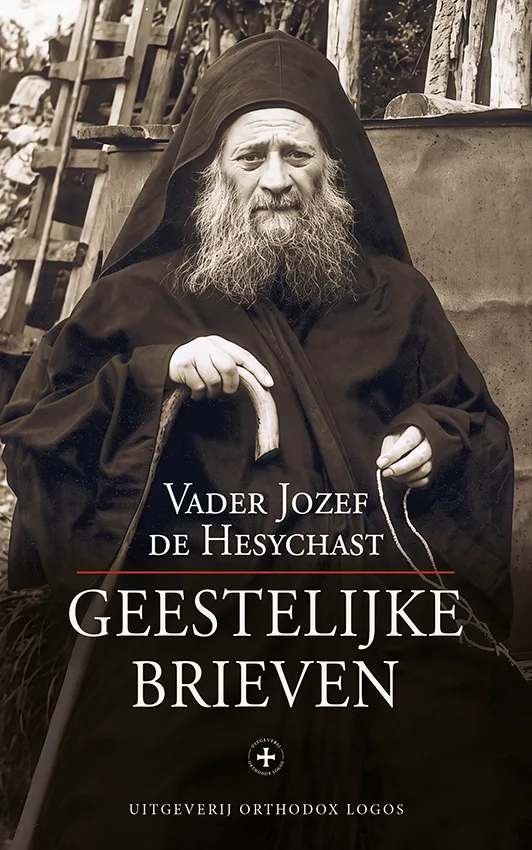
In English his letters appeared as Monastic Wisdom: The Letters of Elder Joseph the Hesychast (St Anthony’s Monastery, 1998). We publish them in Dutch as Geestelijke Brieven, in a revised edition translated by the Monastery of the Mother of God Portaitissa, with an introduction by his disciple Ephraim of Philotheou, named in the book as Archimandrite Efrem. New in this edition are a glossary, an index of names and terms and an index of Scripture references, so that unfamiliar words are explained and the reader does not lose the way in the book. The book has 402 pages and is available in paperback, as an e-book and now also in hardback.
May the Lord comfort all who read these letters, through the prayers of St Joseph.
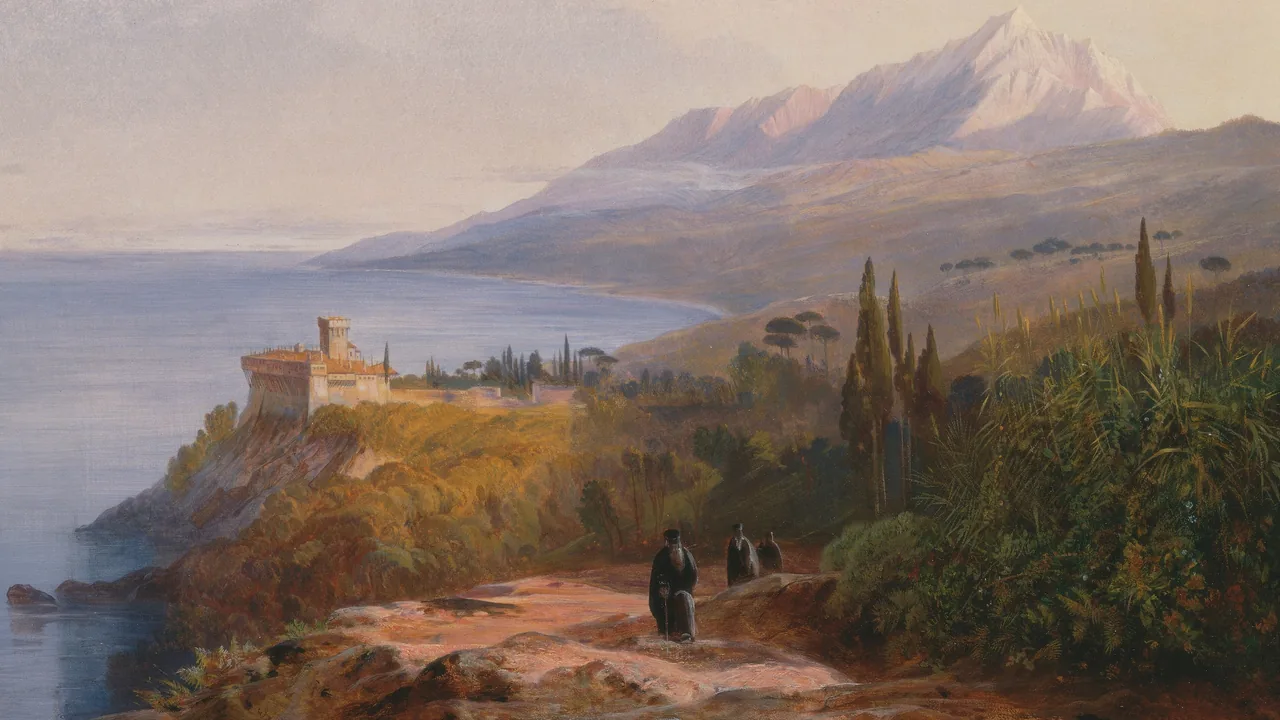
The painting above this article was made by the English painter Edward Lear in 1857, after his journey round the monasteries of Mount Athos in 1856. It shows the summit of the Holy Mountain and the monastery of Stavronikita by the sea, with monks on a path. Joseph lived further south, at the foot of that same summit, in the desert of Athos.