
Blog
The Jesus Prayer
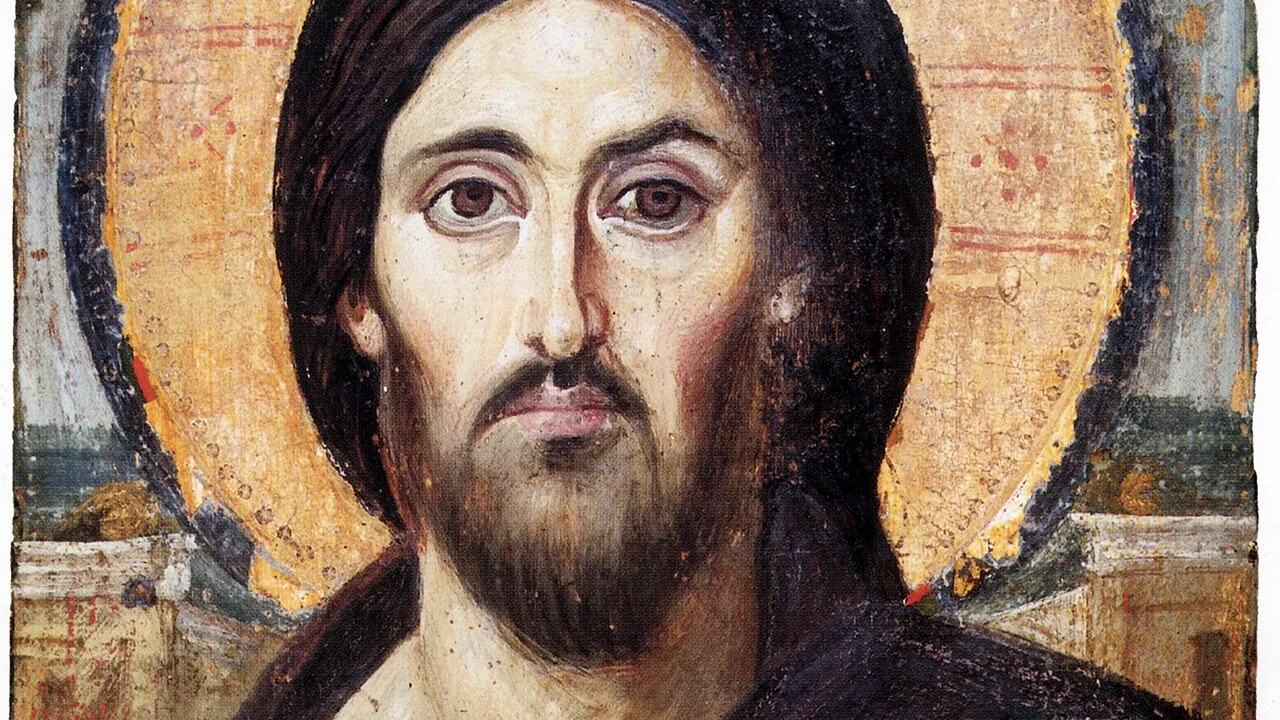
‘Lord Jesus Christ, Son of God, have mercy on me, a sinner.’ Twelve words, and in the Church they have been repeated for sixteen centuries: by monks in the Egyptian desert, by hermits on Sinai and Mount Athos, by a Russian peasant on his way to Siberia, by people on Dutch trains and in Dutch kitchens. The Jesus Prayer is the shortest prayer of the Church and at the same time the prayer about which most has been written. Anyone who wants to understand something of it should not read about it but pray it; still, it helps to know where it comes from and what the Fathers have said about it.
Where it comes from
The words are from the Gospel. The blind Bartimaeus cried out near Jericho: ‘Jesus, Son of David, have mercy on me’, and he kept on crying when the people tried to silence him. The tax collector in the temple did not dare to lift up his eyes and said only: ‘God, be merciful to me a sinner.’ The Jesus Prayer joins those two cries together and sets within them the confession of Peter: that Jesus is the Christ, the Son of the living God. Whoever prays it says in few words everything that the Church believes, and at the same time asks for the one thing a person truly needs.
The Desert Fathers of the fourth century sought a way of doing what the apostle Paul asks: pray without ceasing. For this they took short phrases from Scripture, which a person can repeat at his work. The Jesus Prayer became the chief of these. On Sinai, St John Climacus wrote in the seventh century that the remembrance of Jesus must become one with the breath. On the Holy Mountain the hesychasts, the ‘silent ones’, developed in the fourteenth century a teaching on the prayer of the heart which St Gregory Palamas defended against his critics. In the eighteenth century St Nikodimos of the Holy Mountain and St Macarius of Corinth gathered the writings of the Fathers on prayer into the Philokalia, and St Paisius Velichkovsky translated it into Slavonic. In this way the prayer came to Russia, where in the nineteenth century an unknown pilgrim wrote down his candid tales about it, the book known as The Way of a Pilgrim. That little book has brought more people to the Jesus Prayer than all the learned treatises together.
How one prays it
Simply. One stands or sits, in a quiet corner, preferably before an icon, and says the prayer slowly, with attention, without haste and without artifice. Whoever says the words does not think of anything else: not of an image of Christ, not of a feeling that is supposed to come, but only of Him to whom he speaks. When the thoughts wander, and they do wander, one brings them back to the words without irritation. That bringing back is the prayer itself, not a disruption of it.
Many use a prayer rope, a komboskini or chotki with a hundred knots, to keep the attention on the prayer and to give the hands something to do. It is an aid, not a condition. Nor is the number the goal; St Theophan the Recluse wrote that it is better to say ten prayers with attention than a hundred without. A fixed time helps: ten minutes in the morning and in the evening, every day, is worth more than an hour on Sunday. Whoever has a rule keeps to it on the days when he has no desire to; then it works most.
Besides this, the prayer can go anywhere with one: on the road, in the queue, at simple work, when lying awake. The Fathers speak of the remembrance of God, which in this way slowly permeates the whole day. Nobody needs to leave the world for this. St Gregory Palamas taught that unceasing prayer is enjoined not only on monks but on all Christians, and the pilgrim of the tales was a peasant with a withered arm.
What not to do
On one point the Fathers warn with one voice: the Jesus Prayer is not a technique. The breathing exercises and bodily postures that are described in some ancient texts were meant for experienced monks under the care of a spiritual father, and St Ignatius Brianchaninov already wrote in the nineteenth century that without guidance it is better to leave them alone. Whoever uses the prayer to produce a special experience, to feel warmth or light or stillness, seeks himself and not God; the Fathers call this prelest, spiritual delusion, and it is more dangerous than no prayer at all. What one may expect is something else: that one slowly becomes gentler, more patient, less inclined to judge others. That is the fruit, and it grows unobtrusively, like everything that God causes to grow.
The Jesus Prayer also does not replace the Church. It belongs together with confession and Holy Communion, with the Liturgy on Sunday, with the other prayers of the Church. St Silouan the Athonite, who prayed the prayer day and night for almost half a century, said that one thing is needful, the Holy Spirit, and that He is given to whoever loves his neighbour, even his enemy. The Jesus Prayer leads there, if one lets it.
Books for this article
 Een monnik van de oosterse kerk Het Jezusgebed
Price range: €9,99 through €18,99
Een monnik van de oosterse kerk Het Jezusgebed
Price range: €9,99 through €18,99
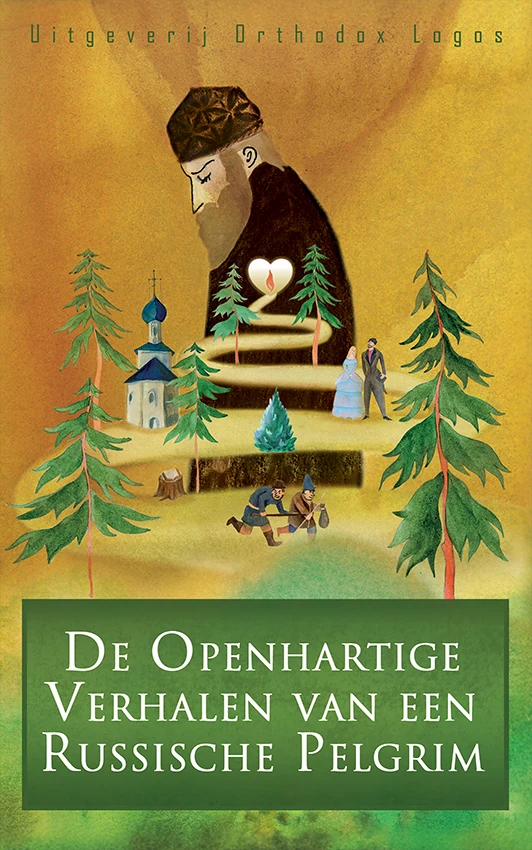 De Openhartige Verhalen van een Russische Pelgrim
€24,99
De Openhartige Verhalen van een Russische Pelgrim
€24,99
 Aartspriester Silouan Osseel Catechetisch Woord over het Gebed van het Hart
Price range: €9,99 through €14,99
Aartspriester Silouan Osseel Catechetisch Woord over het Gebed van het Hart
Price range: €9,99 through €14,99
 Metropoliet Kallistos van Diokleia De Kracht van de Naam
Price range: €9,99 through €14,99
Metropoliet Kallistos van Diokleia De Kracht van de Naam
Price range: €9,99 through €14,99
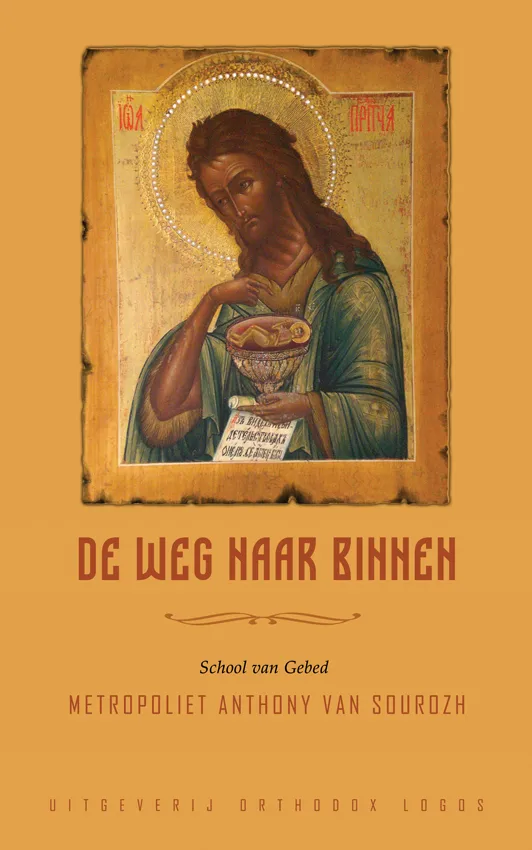 Metropoliet Anthony Van Sourozh De Weg Naar Binnen
Price range: €7,99 through €17,99
Metropoliet Anthony Van Sourozh De Weg Naar Binnen
Price range: €7,99 through €17,99
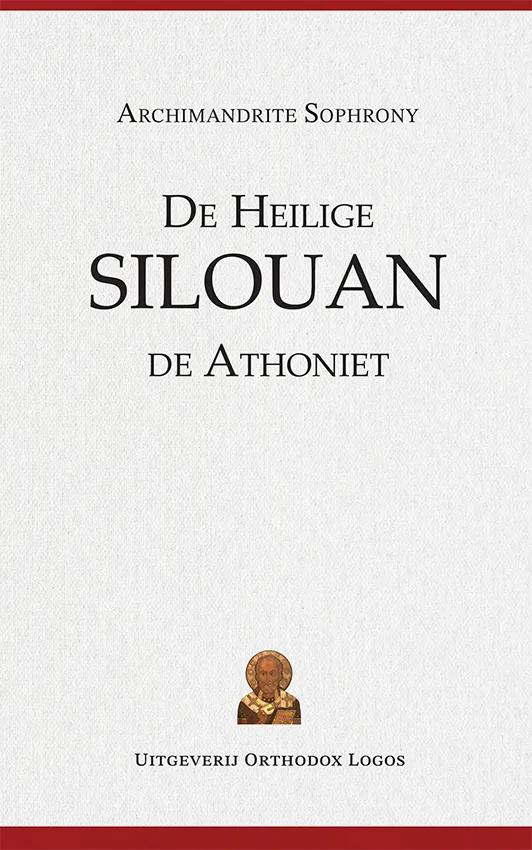 Archimandrite Sophrony De Heilige Silouan de Athoniet (Hardbound)
€29,99
Archimandrite Sophrony De Heilige Silouan de Athoniet (Hardbound)
€29,99