
Blog
What Is Orthodox Christianity? A Short Introduction
Anyone in the Netherlands who hears the word ‘orthodox’ often thinks first of something strict or old-fashioned. In the Church it means something else. The word comes from the Greek and means ‘rightly believing’ and ‘rightly praising’: to keep the faith as it has been handed down, and to praise God as the Church has done from the beginning. The Orthodox Church is the Church of the Christian East, of Greece, Russia, Serbia, Romania, Bulgaria, Georgia and the Middle East, and for more than a century also of many parishes in Western Europe, the Netherlands and Belgium included.
Where the Orthodox Church comes from
The Orthodox Church understands itself as the unbroken continuation of the Church of the apostles. In the first millennium East and West formed one Church, with five ancient patriarchates: Rome, Constantinople, Alexandria, Antioch and Jerusalem. Differences of language, theology and church governance grew over the centuries, until in 1054 the break between Rome and Constantinople became a fact. The East held fast to the teaching of the seven ecumenical councils and to a church order with no single head over all the bishops: the Orthodox churches are self-governing and are bound to one another by the same faith and the same sacraments. Anyone who wants to read that history in a single volume will find it in De Orthodoxe Kerk: verleden en heden (The Orthodox Church: Past and Present) by John Meyendorff.
What Orthodox Christians believe
At its core, what the Nicene Creed says: one God in three Persons; Jesus Christ, the Son of God made man, crucified and risen; the Holy Spirit, who works in the Church. Distinctive of the Orthodox tradition is its emphasis on the deification of man, theosis, as the goal of the Christian life: not only the forgiveness of sins but communion with God, which already begins in this life. St Seraphim of Sarov put it in a single sentence: the goal of the Christian life is the acquisition of the Holy Spirit. Anyone who wants to get to know the teaching can begin with De levende God (The Living God), a catechism in question and answer, or with De orthodoxe weg (The Orthodox Way) by Kallistos Ware, which for many Dutch-speaking readers was the first book they picked up.
The Liturgy: the Church made visible
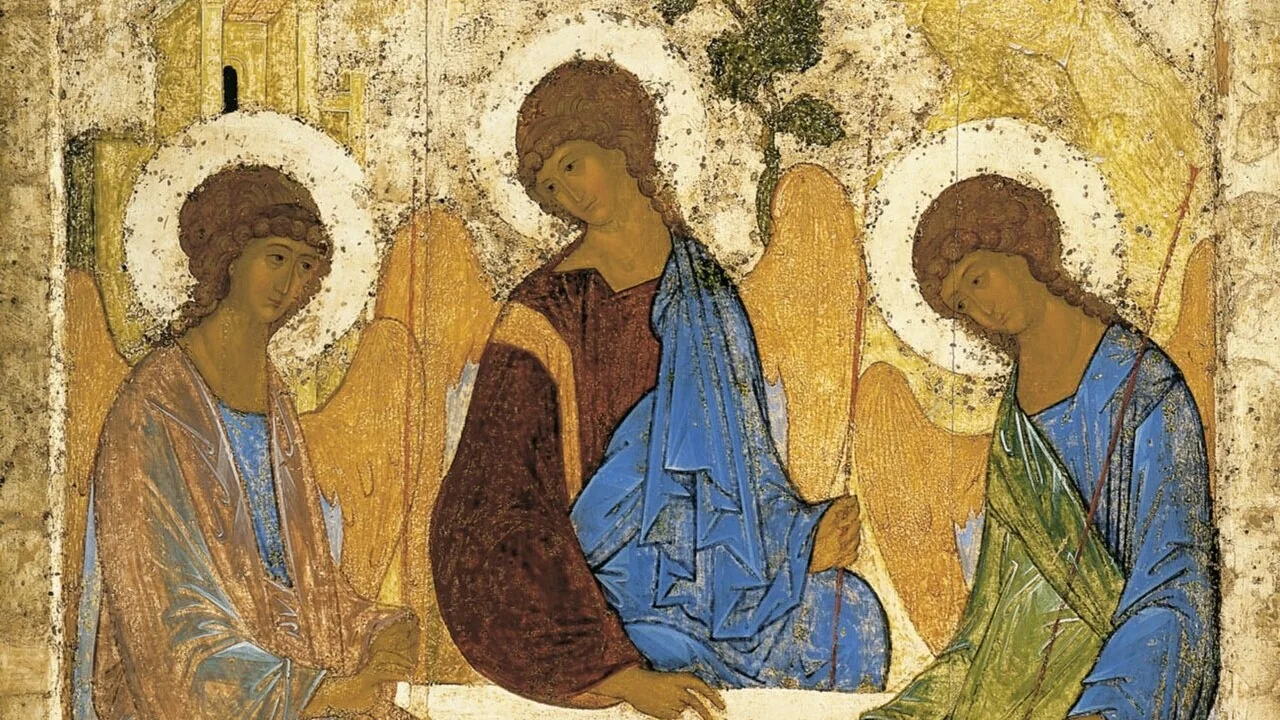
The heart of Orthodox life is the Divine Liturgy, the celebration of the Eucharist, in its broad outline the same as in the fourth century. Anyone who enters an Orthodox church sees icons, candles and the iconostasis, hears singing without instruments and notices that the service is in no hurry. The icon is not a decoration but a window: it is the one depicted who is venerated, not the wood and the paint. The Church year turns on Pascha, the feast of feasts, with Great Lent as the preparation and Holy Week as the culmination; the Vesperlezingen van de Grote Zaterdag (The Vespers Readings of Great and Holy Saturday) tell on the last evening the whole history of salvation, from the creation to the three holy youths in the fiery furnace. Jim Forest wrote about the icon and prayer before it in Bidden met ikonen (Praying with Icons).
Prayer and fasting in daily life
Orthodox Christians pray at home with fixed prayers, morning and evening, often before an icon corner. The best-known prayer is the Jesus Prayer: ‘Lord Jesus Christ, Son of God, have mercy on me, a sinner’, short and continually repeated. Fasting, without meat and dairy on Wednesdays and Fridays and in the four fasting seasons, is not a diet but an exercise in freedom from one’s own will. Confession and Holy Communion belong to the ordinary rhythm of the life of the Church. Anyone who wishes to read further: Het Jezusgebed (The Jesus Prayer) by a Monk of the Eastern Church, Biecht en communie (Confession and Communion) by Alexander Schmemann, and for the youngest the Gebedenboek voor kinderen (Prayer Book for Children).
Orthodox and Catholic, Orthodox and Protestant
With the Roman Catholic Church the Orthodox Church shares the sacraments, the apostolic succession and the veneration of the Virgin Mary and the saints. The differences lie in the authority of the pope, which Orthodoxy does not recognise, in the addition ‘and the Son’ (the filioque) to the Creed, and in a number of practices: married priests, leavened bread in the Eucharist, baptism by immersion, the calendar. With the Protestant churches it shares a reverence for Scripture, but it reads Scripture within the Tradition of the Church, the Church Fathers, the councils and the liturgy, and not outside them.
Orthodox in the Netherlands
In the Netherlands and Belgium there are dozens of Orthodox parishes, belonging to various patriarchates: Greek, Russian, Serbian, Romanian, Bulgarian, Georgian, Antiochian. A growing share of the faithful is Dutch-speaking, and in many parishes the services are also celebrated in Dutch. Anyone who wants to become acquainted can attend a service; nobody needs to know or do anything beforehand, and nobody is pressed into anything. Anyone who wishes to become Orthodox is received into the Church, after a time of preparation, by baptism or, if he has already been baptised as a Christian, by chrismation. What that life looks like in practice, in a world that is not arranged for it, Fr Seraphim Rose describes in How Can You Be an Orthodox Christian Today?.
Books for this article
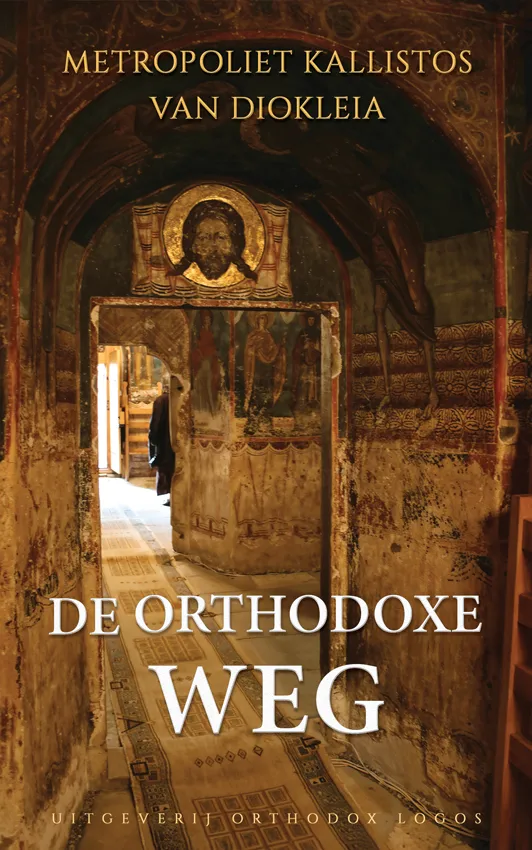 Metropoliet Kallistos van Diokleia De Orthodoxe Weg
€24,49
Metropoliet Kallistos van Diokleia De Orthodoxe Weg
€24,49
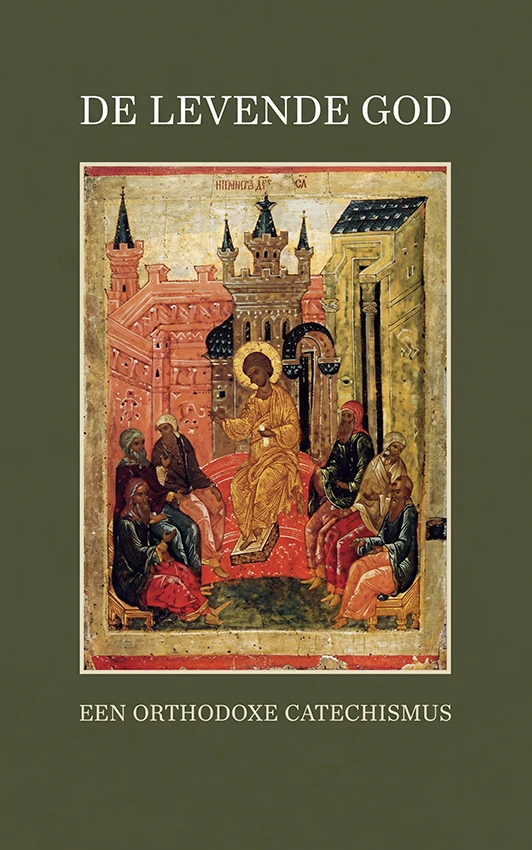 De Levende God. Een Orthodoxe Catechismus
€25,99
De Levende God. Een Orthodoxe Catechismus
€25,99
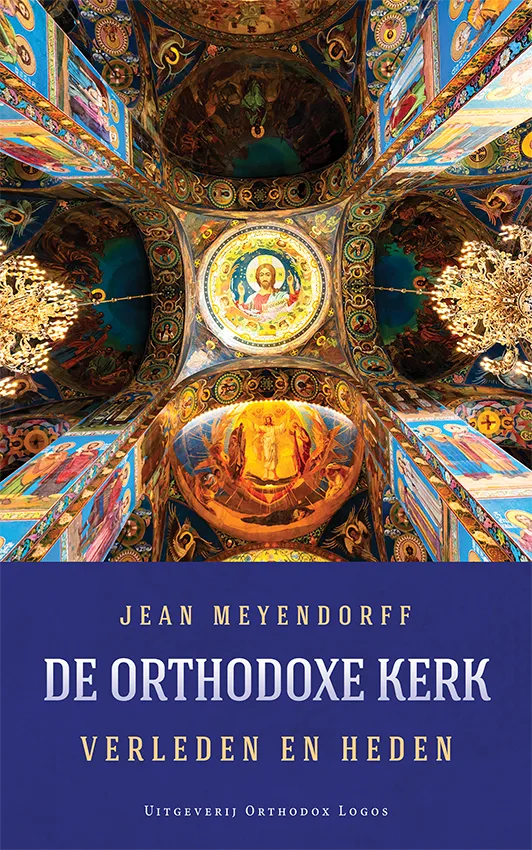 Jean Meyendorff De Orthodoxe Kerk: Verleden en heden
Price range: €9,99 through €19,99
Jean Meyendorff De Orthodoxe Kerk: Verleden en heden
Price range: €9,99 through €19,99
 Archimandrite Sophrony De Heilige Silouan de Athoniet (Hardbound)
€29,99
Archimandrite Sophrony De Heilige Silouan de Athoniet (Hardbound)
€29,99
 Vader Serafim Rose Orthodoxie en de religie van de toekomst
Price range: €9,99 through €25,99
Vader Serafim Rose Orthodoxie en de religie van de toekomst
Price range: €9,99 through €25,99